Article
 Joshua Olawuyi
· March 2025 · 8 min read
Joshua Olawuyi
· March 2025 · 8 min read
Why Marketing Communications Fail: Realigning the 7Ps of Marketing
Marketing communications play a crucial role in shaping brand perception, engaging audiences, and driving business growth. However, many campaigns fail to deliver the expected results. While businesses often attribute failure to weak messaging, poor execution, or limited budgets, a deeper problem lies in the misalignment of marketing communications with the broader marketing mix—the 7Ps of marketing.
Many marketers make the mistake of focusing too much on Promotion (advertising, PR, and digital marketing) while neglecting the other six Ps: Product, Price, Place, People, Process, and Physical Evidence. This article explores why marketing communications fail and how businesses can realign their strategies using the 7Ps framework for sustainable success.
1. Product: The Foundation of Marketing Communications
No amount of great marketing can save a bad product.
As the saying goes, “The fastest way to kill a poor product is to advertise it heavily” One of the main reasons marketing communications fail is when they promote a product that does not meet customer expectations. If the product lacks unique value, has quality issues, or does not solve a real problem, even the most creative campaigns will fall flat.
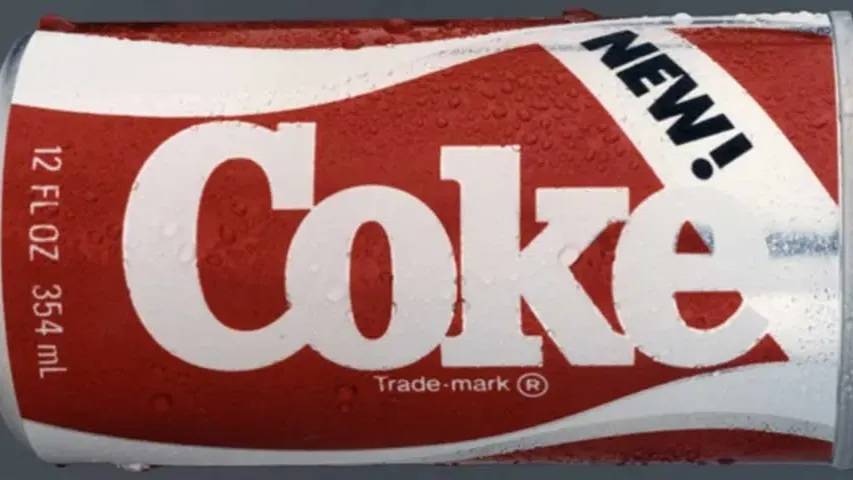
For example, New Coke’s failure in the 1980s wasn’t due to poor marketing communications but because Coca-Cola ignored product-market fit—consumers preferred the original taste. The lesson? Get the product right first.
Marketing success begins with a well-researched product that meets market demand and is continuously improved based on customer feedback. Marketers should align messaging with the product’s actual value rather than overpromising. Storytelling should highlight how the product solves customer pain points
2. Price: The Missing Piece in Communication Strategy
A great message cannot fix a bad pricing strategy.
As Simon Kingsnorth notes, “Brand value is notoriously difficult to quantify”, but pricing must align with perceived value in the market. Many brands fail to integrate pricing into their marketing communications strategy, leading to a mismatch between customer expectations and actual pricing. If customers perceive a product as too expensive or too cheap for its value, marketing efforts will struggle.
Apple successfully markets its premium products by positioning them as high-value, innovative, and aspirational—not just focusing on price but on experience and brand prestige.
The pricing must align with the positioning and perceived value in the market. Use value-based messaging in communications, emphasizing benefits over costs. If premium pricing is used, marketing should justify it by highlighting exclusivity, superior quality, or additional benefits.
3. Place: Marketing Means Nothing If the Product Isn’t Available
You can’t sell what customers can’t find.
A common reason marketing communications fail is promoting a product that isn’t easily accessible to the target audience. If distribution (online or offline) is ineffective, even the best campaigns won’t generate conversions.
Netflix initially struggled in some international markets due to poor content distribution rights and limited payment options. When it realigned its strategy with local partnerships and flexible payment plans, adoption increased.
To succeed, businesses should ensure marketing messages align with where the product is available, optimize distribution channels for accessibility, and leverage location-based marketing strategies, such as geo-targeted ads or local influencer partnerships.
4. People: The Human Factor in Marketing Communications
Your brand is only as strong as the people behind it.
Many marketing campaigns fail because they do not align internal and external communication. If employees, customer service teams, and sales representatives are not aligned with the brand’s message, there will be a disconnect between what is promised and what is delivered.
Zappos built its brand reputation on exceptional customer service. Its marketing is not just about promotions—it is backed by real interactions from well-trained employees.
To address this, businesses should train employees to be brand ambassadors, involve influencers and satisfied customers in marketing communications, and use customer testimonials and employee advocacy to add authenticity.
5. Process: Marketing Cannot Fix a Broken Customer Experience
The best marketing is a great customer experience.
If a company has an inefficient sales, ordering, or customer support process, marketing communications will fail to convert leads into loyal customers. Many brands focus on attracting customers but neglect seamless service delivery.
Amazon’s success is due to seamless purchasing, fast delivery, and easy returns, reinforcing trust in its marketing promises. To improve, companies should optimize the end-to-end customer journey, ensure marketing messages set the right expectations, and leverage automation, AI, and personalization to improve response times and service efficiency.
6. Physical Evidence: The Overlooked Aspect of Marketing Communications
Customers trust what they can see, feel, and experience.
Marketing communications often fail when there is no tangible proof of a brand’s credibility. If customers cannot physically see the brand’s presence, they may not trust the message.
Tesla does not rely on traditional advertising. Instead, its marketing is strengthened by physical evidence—highly visible charging stations, customer word-of-mouth, and futuristic store designs.
Brands should ensure that their messaging is reinforced with visual cues such as packaging, store presence, website design, and brand aesthetics. Additionally, case studies, testimonials, and user-generated content can provide social proof.
7. Promotion: The Final Piece of the Puzzle
Great marketing communications happen when the other Ps are right.
Promotion is often blamed when marketing communications fail, but it is just one piece of the puzzle. A flashy campaign with poor product-market fit, pricing issues, or broken customer experience will always struggle.
Nike’s Just Do It campaign succeeds not just because of great promotion but because it aligns with a strong product, pricing strategy, availability, and customer experience.
To maximize promotional efforts, brands should use integrated marketing communications (IMC) to ensure consistency across advertising, PR, and digital marketing. Storytelling should align with brand values and customer needs while leveraging data-driven insights for continuous optimization.
Marketing Communications Must Be Holistic
The failure of marketing communications is often not about bad promotion but about the misalignment of the 7Ps. To create successful marketing campaigns, businesses must:
- Ensure the product is strong and valuable.
- Align pricing with perceived value.
- Make the product accessible through smart distribution.
- Train people to deliver a great experience.
- Streamline processes for smooth customer interactions.
- Use physical evidence to reinforce credibility.
- Execute promotions that are truthful and consistent with the brand.
By realigning the 7Ps, brands can create creative and effective marketing communications that drive real business results.
References
Books:
- Kotler, P. (2000). Marketing management: Millennium edition (10th ed.). Prentice Hall.
- Kingsnorth, S. (2016). Digital marketing strategy: An integrated approach to online marketing. Kogan Page.
- Wirtz, J., & Lovelock, C. (2016). Services marketing: People, technology, strategy. World Scientific.
Web Articles:
- The Branding Journal. (2025, February). New Coke: A classic branding case study on a major product failure. Retrieved from https://www.thebrandingjournal.com/2025/02/new-coke/
- Renascence. (n.d.). How Zappos delivers exceptional customer experience (CX). Retrieved from https://www.renascence.io/journal/how-zappos-delivers-exceptional-customer-experience-cx
- Learning People. (n.d.). Project management post-mortems: New Coke. Retrieved from https://www.learningpeople.com/uk/resources/blog/project-management-post-mortems-new-coke/
- The Strategy Story. (2021, April 13). Zappos customer service strategy: How they ‘deliver happiness to soles and souls’. Retrieved from https://thestrategystory.com/2021/04/13/zappos-customer-service-strategy/
- The Coca-Cola Company. (n.d.). New Coke: The most memorable marketing blunder ever? Retrieved from https://www.coca-colacompany.com/about-us/history/new-coke-the-most-memorable-marketing-blunder-ever
- Ramsey MediaWorks. (n.d.). Fail faster: What marketing missteps can teach us. Retrieved from https://ramseymediaworks.com/blog/entry/fail-faster
- Vaynerchuk, G. (n.d.). AskGaryVee Episode 150: No amount of marketing solves a bad product. Inc. Retrieved from https://www.inc.com/gary-vaynerchuk/askgaryvee-episode-150-no-amount-of-marketing-solves-a-bad-product.html
- Foliovision. (2016, December). Great marketing can’t save a bad product. Retrieved from https://foliovision.com/2016/12/great-marketing
- Simplilearn. (n.d.). Apple marketing strategy. Retrieved from https://www.simplilearn.com/tutorials/marketing-case-studies-tutorial/apple-marketing-strategy
- Marcom. (n.d.). Apple’s marketing: 8 key strategies and famous campaigns. Retrieved from https://marcom.com/apples-marketing-8-key-strategies-and-famous-campaigns/
- Marketing Strategy. (n.d.). The importance of Apple’s brand positioning. Retrieved from https://www.marketingstrategy.com/the-importance-of-apples-brand-positioning/
- The Brand Hopper. (2023, July 18). Just Do It right: Analyzing Nike’s timeless marketing strategies. Retrieved from https://thebrandhopper.com/2023/07/18/just-do-it-right-analyzing-nike-timeless-marketing-strategies/
- Time for Designs. (2023, November 8). Unraveling the brilliance: How Nike’s ‘Just Do It’ became more than a slogan. Retrieved from https://www.timefordesigns.com/blog/2023/11/08/unravelling-the-brilliance-how-nikes-just-do-it-became-more-than-a-slogan/
- World Brand Affairs. (n.d.). How Nike’s ‘Just Do It’ campaign became a global phenomenon. Retrieved from https://worldbrandaffairs.com/how-nikes-just-do-it-campaign-became-a-global-phenomenon/
- Moon Technolabs. (n.d.). Netflix business model. Retrieved from https://www.moontechnolabs.com/blog/netflix-business-model/
- Urlaunched. (n.d.). Netflix business model: Revenue model to consider for a startup. Retrieved from https://blog.urlaunched.com/netflix-business-model-revenue-model-to-consider-for-a-startup/
- Penfriend. (n.d.). Subscription business case studies. Retrieved from https://penfriend.ai/blog/subscription-business-case-studies
- Dynamic Language. (n.d.). The three C’s of Netflix global expansion strategy. Retrieved from https://www.dynamiclanguage.com/the-three-cs-of-netflix-global-expansion-strategy/
- Shah, M. (n.d.). The puzzle of Amazon’s success: Exploring strategic fit among activities. Medium. Retrieved from https://shahmm.medium.com/the-puzzle-of-amazons-success-exploring-strategic-fit-among-activities-3ad86170d118
- Amazon Web Services. (n.d.). The imperatives of customer-centric innovation. Retrieved from https://aws.amazon.com/executive-insights/content/the-imperatives-of-customer-centric-innovation/
- ShipperHQ. (2025, February). Shipping software to deliver Amazon-like checkout experiences. Retrieved from https://blog.shipperhq.com/2025/02/shipping-software-to-deliver-amazon-like-checkout-experiences
- Perpetua. (n.d.). Why is Amazon so successful? Amazon success story. Retrieved from https://perpetua.io/blog-why-is-amazon-so-successful-amazon-success-story/
- Segmentify. (n.d.). Tesla marketing strategy. Retrieved from https://segmentify.com/blog/tesla-marketing-strategy/
- Disfold. (n.d.). Tesla brand strategy. Retrieved from https://blog.disfold.com/tesla-brand-strategy/
- Krows Digital. (n.d.). Tesla’s marketing playbook: Driving success without paid ads. Retrieved from https://krows-digital.com/teslas-marketing-playbook-driving-success-without-paid-ads/